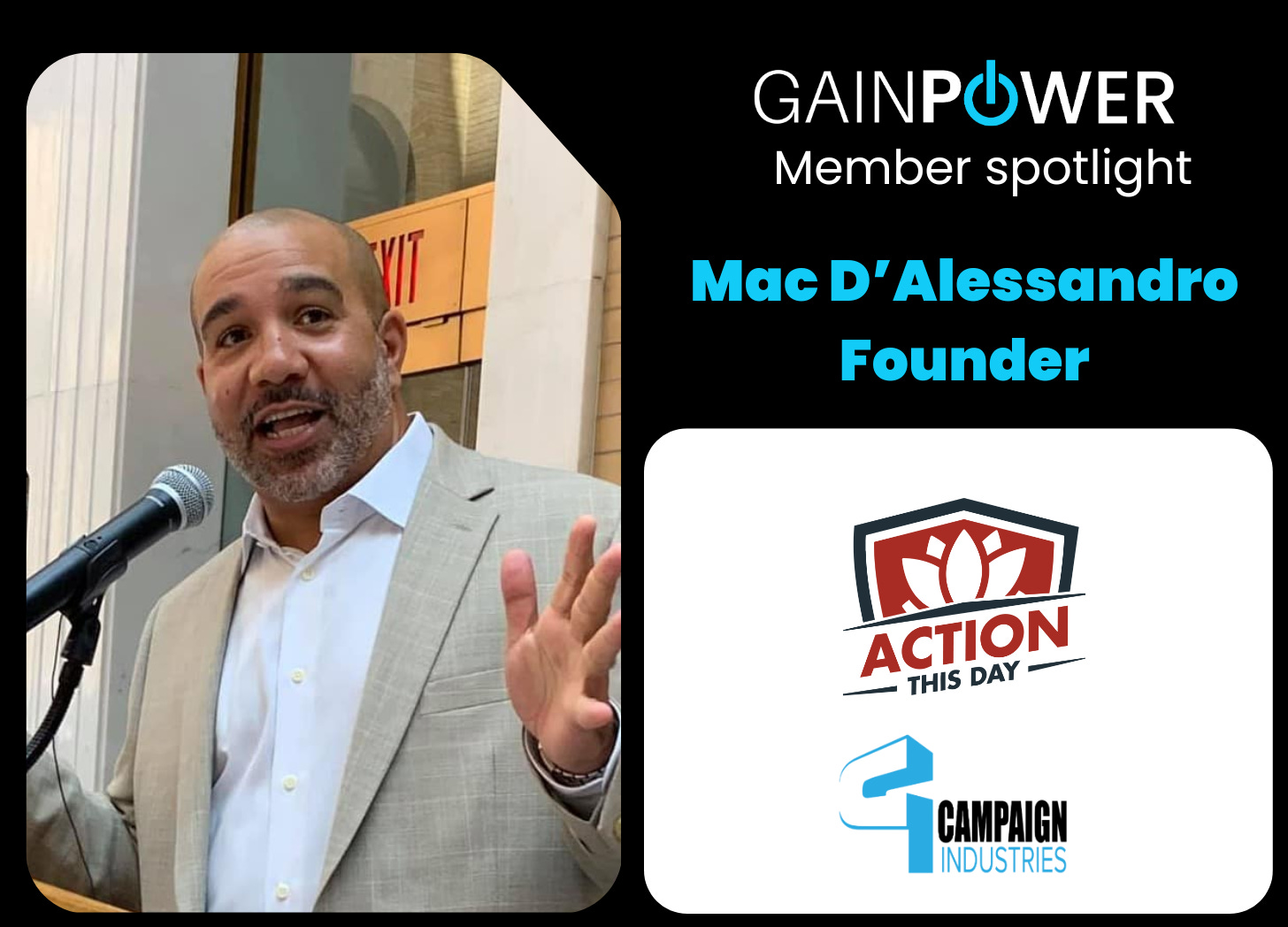
Mac D’Alessandro and the Work That Protects Our Field Programs
Because the hardest work in elections deserves real protection
There is a lot of attention in our movement on messages, moments, and media—and rightly so. But elections are ultimately won or lost because of the people and systems on the ground doing the hardest, least visible work.
That’s why I want to take a moment to lift Mac D’Alessandro and the work he’s doing through his new venture, Action This Day (ATD).
Mac is the founder of Campaign Industries and a longtime leader in the Democratic and progressive ecosystem. For years, his work has focused on helping campaigns build disciplined, effective field operations—the kind that respect people’s time, protect volunteers and staff, and actually move voters. His career has been rooted in a simple but often ignored truth: field programs are human systems, and they deserve to be protected with the same seriousness as budgets, data, and media plans.
With Action This Day, Mac is addressing a threat that many organizers and campaign leaders have experienced—but that too often goes unnamed or unspoken.
Why Action This Day Exists
The idea that right-wing groups actively infiltrate progressive campaigns and organizations is not speculative. It is documented.
In 2020, The New York Times reported that Erik Prince—founder of Blackwater and a close ally of the Trump ecosystem—helped recruit former U.S. and British intelligence operatives to conduct covert operations against Democratic campaigns, labor unions, and progressive organizations. Those efforts included planting operatives inside campaigns under false pretenses, secretly recording staff, copying internal documents, and attempting to manufacture scandals designed to discredit organizations from within.
One of the documented targets was Abigail Spanberger's congressional campaign. Others included teachers’ unions and progressive advocacy organizations. These weren’t one-off incidents. They were part of a deliberate strategy.
Over multiple election cycles, as changing demographics and electoral math have made it harder for Republicans to win outright majorities, the use of subversive, asymmetric tactics has increased. While our movement has invested heavily in digital and cybersecurity protections, field programs—both volunteer-driven and paid—remain especially vulnerable.
That vulnerability isn’t theoretical.
It’s operational.
What Action This Day Actually Does
Action This Day exists to help campaigns address those risks professionally, legally, and ethically—without undermining the openness and trust that make grassroots organizing possible.
Drawing inspiration from a historical moment of urgency, ATD takes its name from a directive issued by Winston Churchill during World War II. When codebreaker Alan Turing was denied the resources needed to crack German codes, Churchill intervened directly. At the top of his memo, written in red, were three words: “Action This Day.” It was not a call for panic, but for clarity, urgency, and responsibility.
Today, ATD brings together:
Experienced campaign field operatives who understand canvassing, staffing, volunteer management, and the realities of modern campaigns
Counterintelligence and security professionals with backgrounds in military intelligence and federal agencies
Cybersecurity and data specialists focused on system integrity and quality control
Their work focuses on systems, not individuals.
According to ATD’s own materials, their operatives:
Apply using their real identities and credentials
Follow standard campaign hiring and onboarding processes
Evaluate systemic vulnerabilities, quality control processes, and operational protocols
Do not conduct surveillance on individual staff or volunteers
Do not make personnel decisions
Provide campaigns with intelligence about where systems are vulnerable, so internal leadership can decide how to respond.
This is about protecting the investment campaigns make in people, time, trust, and infrastructure—not about suspicion or internal policing.
Stewardship, Not Paranoia
While recent election results gave many of us reasons to feel encouraged, they also mean that opposition forces are likely to redouble their subversive efforts. Preparing for that reality isn’t pessimism. It’s professionalism.
What I appreciate most about Mac’s approach is the respect it shows for field work itself. Organizers, volunteers, and staff are not treated as expendable inputs, but as people whose safety, time, and integrity matter.
Field programs represent a significant investment of human energy. Caring for the people who show up every day to knock doors, make calls, and build relationships means taking real threats seriously—and addressing them before harm is done.
This is the kind of behind-the-scenes leadership our movement needs more of. The kind that doesn’t seek attention, but makes winning—and sustaining wins—possible.
I’m grateful to Mac for continuing to invest in the systems that protect our people and strengthen the work on the ground—because democracy doesn’t just need passion.
It needs infrastructure.
You can learn more about Mac’s work here:
Community & Infrastructure Spotlight
At GAIN Power, we believe that democracy is strengthened not only by ideas and messages, but also by the people, organizations, and systems that enable organizing and governance.
Our Community & Infrastructure Spotlight features are an intentional effort to:
Publicly recognize the people who invest in organizers and long-term democratic infrastructure
Highlight organizations and services that benefit the broader progressive ecosystem—not just one campaign or cycle
Elevate behind-the-scenes leadership that protects, strengthens, and sustains the people who power democracy
We believe visibility is part of accountability—and gratitude is part of movement-building.
Transparency & Disclosure
I also want to make this clear: Mac D’Alessandro is a longtime GAIN Power Super Member and a sponsor of our work. I was reminded, while writing this post, that we featured Mac as Member of the Month back in 2022 and did so in a much more personal way, highlighting his journey. I just went back and reread our post from then, and you should too. We believe in publicly recognizing the people who invest in organizers and in the infrastructure that strengthens our entire field—and in spotlighting organizations and services that make us all better. This post isn’t sponsored; it’s shared because Action This Day represents the kind of ecosystem-strengthening work we want more of.


The Erik Prince infiltration examples from 2020 really highlight how asymmetric warfare tactics have shifted from physical to organizational spaces. What's particularly clever about Action This Day's model is framing this as systemic vulnerability assessment rather than individual surveillance, which preserves the trust-based culture that makes field organizing work in the first place. Tho I'm curious how campaigns balance the operational security gains against the potentialfor creating an atmosphere of suspicion, especially since grassroots movements rely so heavily on low-friction volunteer onboarding.